What Is a Rectangle Body Shape?
The rectangle body shape is one of the common body types in which the shoulders and hips are generally well balanced, while the waist does not have a very pronounced curve.
In this body shape, the visual difference between the waist and the upper or lower body is usually less noticeable. As a result, the overall silhouette may appear straighter and more balanced.
However, “rectangle” does not mean completely straight or without curves. Body shape is actually a spectrum, and a person may have characteristics of several body shapes at the same time.
Anthropometric studies also consider a combination of body measurements and ratios when identifying body shape, rather than relying on a single measurement.
Characteristics of a Rectangle Body Shape
To identify this body shape, focus on the proportions between different areas of the body rather than on weight or clothing size.
Body Area | Common Characteristic | What Matters When Choosing a Dress |
Shoulders | Relatively balanced with the hips | Balance between the upper and lower body |
Waist | Less pronounced curve and less defined waistline | Possibility of creating visual emphasis on the waist |
Hips | Relatively balanced with the shoulders | Choosing the appropriate amount of skirt volume |
Overall Silhouette | Balanced and relatively straight | Creating or maintaining the desired lines through dress design |
These characteristics describe general patterns and are not absolute criteria for everyone.
How Can You Identify a Rectangle Body Shape?
For an initial assessment, it is best to observe your body in its natural state.
If you can take measurements, measure these four areas:
Shoulders, bust, waist, and hips.
However, more important than the numbers themselves is the relationship between them.
Ask yourself three simple questions:
Are your shoulders and hips relatively similar in proportion?
Does your waist have a very pronounced indentation compared with them?
Does the overall line of your body appear relatively straight rather than showing a strong contrast between the waist and hips?
If the answer to most of these questions is yes, your body shape may be close to a rectangle.
An Important Note
If you are unsure whether your body shape is closer to a rectangle or an hourglass, pay attention to your waist.
With an hourglass shape, the shoulders and hips may be well balanced, but the waist is more clearly defined. In a rectangle body shape, this difference is less noticeable.
What Does a Rectangle Body Shape Tell Us About Dress Design?
This is one of the most important points of this article.
Understanding your body shape is not supposed to tell you:
“Wear this dress and avoid that dress.”
Instead, it helps us understand how dress design can influence and shape the visual appearance of the body.
Since the waist is generally less defined in a rectangle body shape, if the bride wants to create greater contrast between the waist and the upper or lower body, design elements can be used to create that effect.
This can be achieved through:
Defining the waistline
Adjusting skirt volume
Using shaping cuts
Creating curved lines
Guiding the eye with vertical lines
What Is the Best Wedding Dress for a Rectangle Body Shape?
There is no single wedding-dress style that is suitable for every bride with a rectangle body shape.
The first step is to understand what the bride wants from her dress.
If You Want the Waist to Appear More Defined
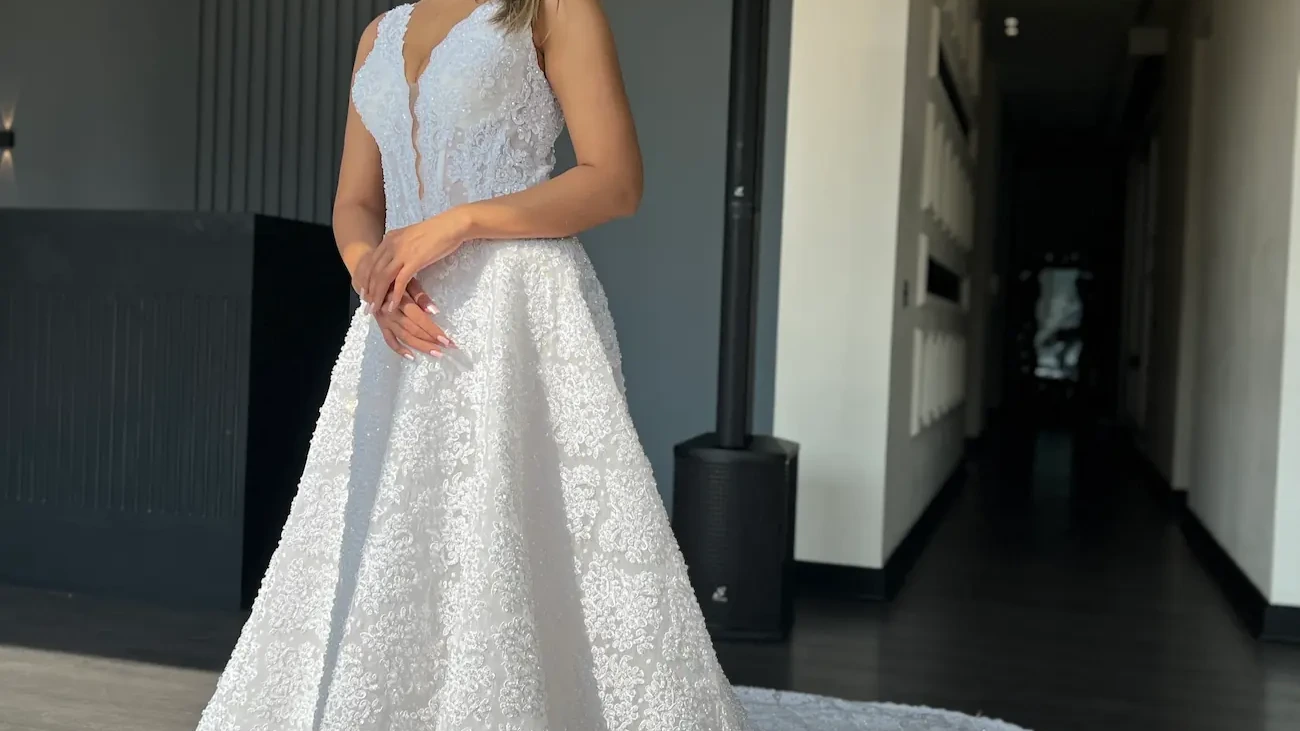
Look for dresses with a clearly defined waistline and a skirt with controlled volume or a gradual flare.
A-Line and Ball Gown silhouettes are worth considering in this case.
Why?
The contrast between a relatively defined waist and an open or voluminous skirt can make the waist appear more prominent.
If You Want a More Curved Silhouette
Fit & Flare can be an attractive option.
This silhouette initially follows the natural shape of the body and then gradually flares out toward the lower part of the dress, creating more curved lines in the overall silhouette.
However, the degree of body-hugging fit and the point at which the skirt begins to flare should be coordinated with the body’s actual proportions.
If You Want an Elongated and Minimalist Look
You do not necessarily have to emphasize the waist.
Sheath can be a suitable choice because it keeps the lines of the dress simple and close to the body’s natural shape, making it particularly suitable for minimalist and modern styles.
If You Dream of a Princess Wedding Dress
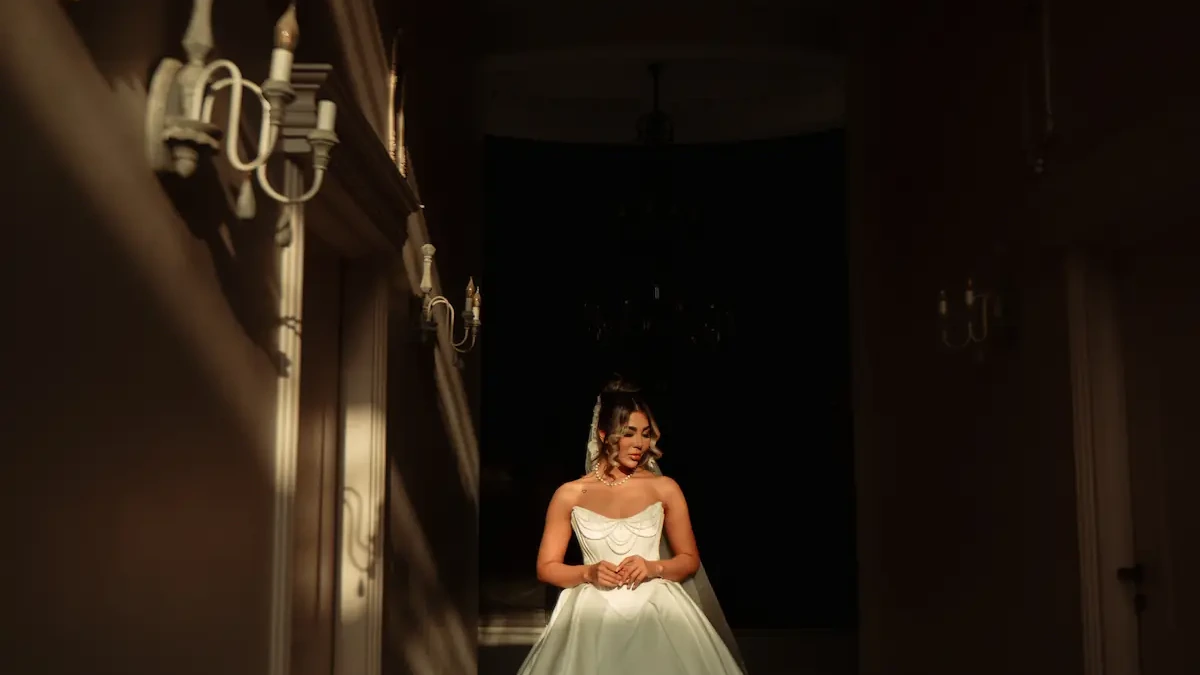
If your preferred style is grand and princess-like, a Ball Gown can be an excellent choice.
A defined waist combined with a voluminous skirt creates strong contrast within the silhouette, giving the dress a classic and striking appearance.
Best Necklines for a Rectangle Body Shape
After the silhouette, the neckline is one of the most important details of a dress.
Design Goal | Neckline to Consider | Visual Effect |
Create a curved line through the upper body | Sweetheart | Makes the upper-body line softer and more curved |
Make the upper body appear longer | V-Neck | Creates a vertical line |
Emphasize the shoulders | Off-Shoulder | Draws attention toward the shoulders |
Create a structured, modern appearance | Square Neckline | Creates clear, geometric lines |
However, a neckline should not be selected based on body shape alone. Neck shape, shoulder width, bust volume, hairstyle, and the overall design of the dress are also important considerations.
How Do Fabric and Dress Details Change the Result?
Two dresses with a similar silhouette can look completely different on the body.
Structured Fabrics
They maintain the shape and lines of the dress more clearly and are suitable for more precise, structured designs.
Soft and Fluid Fabrics
They create a freer drape and greater movement, resulting in a softer appearance.
Lace and Embellishments
They can create focal points and direct attention toward a particular area of the dress.
Seaming and Draping
They can make the waistline or curved lines of the dress more prominent.
Therefore, when choosing a wedding dress, do not ask only:
“Which style is suitable for my body shape?”
A better question is:
“What kind of cut, fabric, and details can create the look I want?”
Wedding Dress Selection Guide for a Rectangle Body Shape
Bride’s Goal | Suitable Design Features | Why? | Styles to Consider |
Make the waist appear more defined | Defined waistline + flared skirt | Creates visual contrast between the waist and skirt | A-Line, Ball Gown |
Create a more curved silhouette | Follows the body + gradual skirt flare | Creates curved lines within the silhouette | Fit & Flare |
Create an elongated, minimalist look | Simple lines + vertical extension | Maintains a clean, elongated silhouette | Sheath |
Create a princess style | Defined waist + voluminous skirt | Creates maximum contrast in the silhouette | Ball Gown |
Emphasize the upper body | Concentrated neckline and details | Directs attention toward the upper body | Sweetheart, Off-Shoulder |
Create a longer appearance | Vertical lines | Guides the eye along the body | Sheath, V-Neck |
This table is a guide for making choices, not a list of restrictions. If a bride has a rectangle body shape but loves another style, her body shape should never prevent her from choosing it.
Queen Land’s Approach to Choosing a Wedding Dress
At Queen Land, we consider understanding body shape to be a starting point for design, rather than a restrictive framework.
From Noshin Zolfaghari’s perspective, choosing a wedding dress produces the best result when body shape, silhouette, fabric, design details, and the bride’s personality are considered together.
For this reason, two brides with similar body shapes may arrive at completely different choices, because what matters to one bride may not necessarily be important to another.
Conclusion
The rectangle body shape is generally characterized by relatively balanced shoulders and hips and a less pronounced waist curve. To identify it, rather than focusing on weight or a single measurement, it is better to consider the body’s overall proportions.
When choosing a wedding dress, the next step is to determine the result you want:
If you want a more defined waist, consider A-Line and Ball Gown styles. If you want more curved lines, Fit & Flare is an option worth considering. And if you prefer a simple, elongated style, Sheath can be an excellent choice.
Ultimately, body shape is only one factor in choosing a wedding dress. The ideal wedding dress is one that works harmoniously with the bride’s proportions while also expressing her personality and personal taste.
Frequently Asked Questions
What is a rectangle body shape?
It is a body shape in which the shoulders and hips are generally well balanced, while the waist does not have a very pronounced curve.
How can I tell if I have a rectangle body shape?
Look at your shoulders, bust, waist, and hips. If your shoulders and hips are relatively balanced and your waist is less defined, your body shape may be close to a rectangle.
What is the best wedding dress for a rectangle body shape?
It depends on your goal. A-Line and Ball Gown can be considered when you want greater emphasis on the waist; Fit & Flare can help create more curved lines; and Sheath can be a suitable choice for a minimalist, elongated appearance.
Does a rectangle body shape mean having a slim body?
No. Body shape is different from body weight and clothing size.
Can a bride with a rectangle body shape wear a fitted wedding dress?
Yes. No particular dress style is prohibited simply because of body shape. Fit & Flare and Sheath can both be suitable options for fitted styles.
How can the waist be made more defined in a wedding dress?
A defined waistline, shaping cuts, draping, and a flared or voluminous skirt can create greater visual contrast around the waist.